
Mold Remediation in Greenwich
Mold in Your Greenwich Property?
From the Byram River villages of Glenville and Pemberwick to the Mianus River shoreline at Cos Cob and Riverside, and out to the gated estates of Belle Haven and the Back Country, Greenwich sits among water features that keep its homes damp year-round. The Byram and Mianus rivers, Strickland Brook backing up at Suburban and Putnam Avenue during high tide, and Horseneck Brook overwhelming culverts in central Greenwich all feed moisture into basements and crawl spaces. KPM Restoration follows IICRC S520 mold remediation protocols and EPA guidance for properties across town, from Old Greenwich and Byram cottages to the fieldstone-foundation estates of Round Hill and Field Point. Our crews are IICRC certified and follow OSHA-compliant safety protocols. See our full restoration services in Greenwich.
Call Now (914) 521-4110Get Help Now
Trusted in Greenwich & Beyond
Real, verified 5-star reviews from homeowners and businesses we've served.
“I recently had a water loss at my home in Elmsford, New York and KPM Restoration did an amazing job from start to finish. Their team came in quickly, took great care of everything, and made the whole process stress free. They were professional, responsible, easy to work with, and kept great communication throughout the job. On top of that, their pricing was very fair. I highly recommend KPM Restoration to anyone who needs restoration services!”
Ryan Cox
“We called KPM Restoration when we had water in our basement. They did a great job removing the water and drying it out. Jamie and Rob were really easy to work with. Highly recommended.”
Julia Rizzo
“Top notch business! James the owner is a straight shooter and does amazing business!”
michael donadio
“KPM Restoration is top-notch. Their team is responsive, professional, and truly cares about the quality of their work. From start to finish, they handled everything with attention to detail and clear communication. It’s not easy finding a company you can trust during stressful situations like property damage, but KPM delivers peace of mind. Highly recommend to anyone in need of restoration services”
Chester W. DiBari III
“KPM is top tier. They go above and beyond would highly recommend them to anyone in need!”
Airstream Catering
“Jamie and his team were highly professional and knowledgeable!”
Andrew Ross
“I have used KPM personally for fire damage from a chimney Fire and Water damage from broken pipes on two different occasions in Dutchess County. They Cleaned all the smoke stains and got rid of the smoke smell throughout the entire house. For the water damage they removed carpets and sheet rock. They treated for mold, cleaned everything up perfectly, used driers and dehumidifiers, tested for any residual moisture and best of all they delt with the insurance company and adjuster to get what I deserved to replace everything. The entire KPM team from the start were all respectful, extremely professional, very knowledgeable, caring, polite and the men were absolutely gentleman to my family and I. I will never forget this and will highly recommend them to anyone. Commercial and residential. Thank you KPM”
rich wisseman
“When my basement decided to become a pond, KPM came in like the cleanup Avengers. They were quick to show up, professional and they got everything cleaned up and dried out before I could fully spiral. Hoping I won’t ever have to call again but they did a great job!”
Kate Garofalo
What to Know
Understanding Mold Growth
Connecticut Mold Remediation: IICRC and EPA Standards
Connecticut does not have a state-mandated mold remediation license. We follow the national industry standard (IICRC S520) and EPA mold remediation guidance, which together define proper protocols for containment, HEPA filtration, removal of affected materials, antimicrobial treatment, and post-remediation verification. Our technicians hold IICRC certifications including WRT (Water Damage Restoration) and AMRT (Applied Microbial Remediation). For documentation purposes, such as a home sale or insurance claim, we recommend hiring an independent mold inspector. We're happy to refer one and coordinate the work.
Mold in Greenwich's Older Homes and Estates
The Great Estates era left Belle Haven, Field Point, Round Hill, and the Back Country full of shingle-style, Tudor, and Georgian Revival mansions with fieldstone and poured-concrete foundations that wick moisture year-round. Greenwich also holds some of Connecticut's oldest housing stock, including pre-Revolutionary farmhouses with rubble-stone foundations and hand-hewn framing in the spirit of the Bush-Holley House in Cos Cob and Putnam Cottage on East Putnam Avenue. In the heavily wooded Back Country, clay-dense soils channel runoff toward older foundations, so estates there often run on sump pumps and still develop crawl-space moisture and hidden colonies behind plaster. We use thermal imaging and moisture meters to find growth before any demo, then contain and remove it without damaging period millwork or finishes.
Sound-Shore Humidity and Coastal Properties
Properties in Old Greenwich near Tod's Point, along Byram Shore Road, in Riverside, and on the Belle Haven peninsula face higher year-round humidity from Long Island Sound exposure. Many are small wood-frame beach cottages on crawl spaces or flood-zone slabs, mixed in with larger waterfront estates, and FEMA flood zone rules shape what can be rebuilt. Combined with finished lower levels and HVAC systems that were not specified for marine conditions, this creates ideal conditions for hidden mold behind built-ins and inside wall cavities. We scope these losses with thermal imaging and moisture meters before any demo to make sure the remediation captures the full footprint.
After a Water Loss: Mold Prevention Window
Mold can begin colonizing wet materials in as little as 24 to 48 hours. Greenwich has a long flood history, from the 1955 Byram River disaster that crested two feet over flood stage in Pemberwick to Tropical Storm Ida in 2021, which dropped roughly eight inches of rain in nine hours and pushed Horseneck Brook culverts into basements across central and east Greenwich. Whether the source is a burst pipe, a sump-pump failure on a clay-soil Back Country lot, an appliance leak, or river and tidal flooding in Glenville, Pemberwick, or the Cos Cob Strickland Brook area, getting the structure dried and treated fast is what keeps a water job from turning into a mold job. If the water event is recent, our water damage restoration and mold teams coordinate so you are not managing two contractors.
We Work With Your Insurance
Mold claims are handled carefully by insurance carriers and documentation matters, especially on high-value Greenwich properties. We bill in Xactimate, the industry-standard estimating software adjusters use, and we coordinate directly with your carrier and any independent assessor. Our team includes former insurance professionals who understand what adjusters need and how to present a claim cleanly.
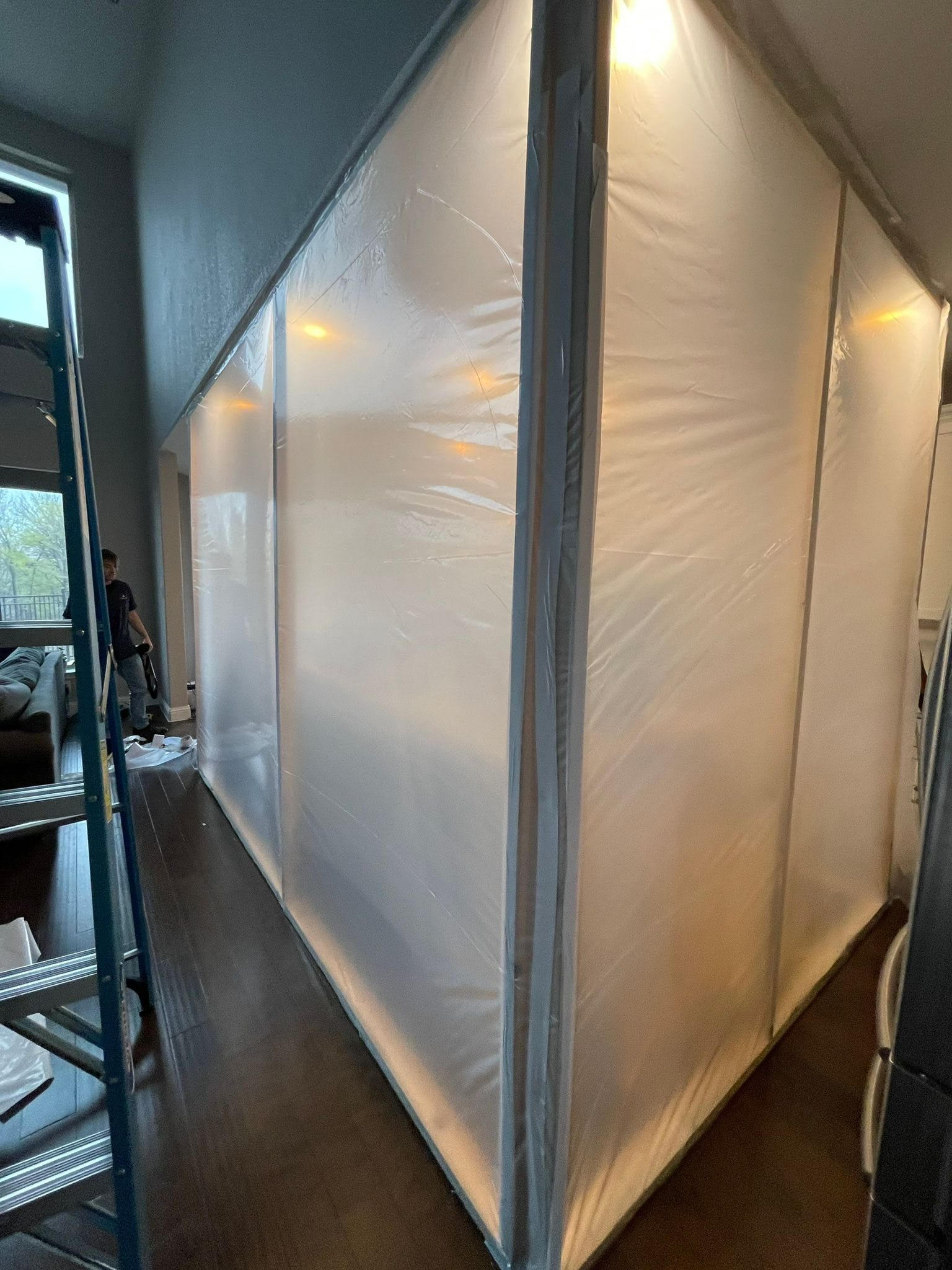
How Mold Remediation Works in Connecticut
Connecticut does not require a state-mandated mold remediation license. We follow IICRC S520 protocols and EPA guidance, the national industry standard, and recommend an independent assessor for pre- and post-remediation documentation.
Inspection and Quote
We perform a visual inspection of the affected area, identify the moisture source, and provide a detailed scope and estimate. For documentation purposes, we can recommend independent mold assessors who perform pre- and post-remediation testing.
Source Repair
The source of the moisture must be addressed before remediation begins, otherwise the mold will return. We can handle the repair ourselves or coordinate with plumbers or roofers to get it resolved.
Containment and Remediation
We set up containment barriers and negative air pressure systems to isolate the affected area. HEPA-filtered air scrubbers capture airborne spores. Contaminated materials are safely removed following IICRC S520 protocols, and all surfaces are treated with professional-grade antimicrobial agents.
Restoration
If an independent assessor was engaged, they return to perform clearance testing and verify successful remediation. We then restore the space, including drywall, insulation, and paint, back to pre-loss condition.
Why Greenwich Chooses KPM
Local expertise, certified technicians, and a commitment to getting you back to normal.

IICRC S520 Certified
Our technicians follow IICRC S520 mold remediation protocols and EPA guidance, the national industry standard for containment, HEPA filtration, removal, and antimicrobial treatment.
IICRC AMRT Certified
Our technicians hold Applied Microbial Remediation Technician (AMRT) certifications and follow all IICRC S520 protocols.
We Handle the Rebuild
After your assessor confirms clearance, our in-house crews restore drywall, insulation, painting, and any other damage from the remediation process.
Locally Owned Since 2017
We're your neighbors. KPM is locally owned and operated across the Hudson Valley and Capital Region with 9 offices.
Need mold remediation in Greenwich?
Get in touch to schedule an assessment. We'll respond promptly with next steps for your Greenwich property.